Monday, February 25, 2019
Predictions From 4 Industry Leaders
As the global economy and markets continue to shift, predicting the future of food can be difficult. However, several trends are likely to have an impact on what and how people eat in the coming years. Technology, convenience and personalization are some of the top trends that will affect consumption. Four industry leaders shared their thoughts on the food industry's future in recent interviews: Ran Peled from CommonSense Robotics, Bruce Schroder from Moe’s Southwest Grill, Elana Karp from Plated and Christine Marcus from Alchemista.
Technology
People are changing the way they eat, cook and shop for food, and technology is one of the main reasons behind this. Grocery shopping has become more fragmented for families with spontaneous "fill in" shopping trips supplanting the traditional weekly stock-up trip because of e-commerce.
"In a 2018 consumer survey we conducted, more than 50% of the people reported they would prefer to receive a few smaller orders throughout the week rather than one large order each week. Acosta reports that 85% of consumers do not know what they are having for dinner until hours before mealtime. While Americans do dine out more than ever before, NPD reports that four out of five meals are still prepared at home. Americans are eating more meals at home today than they did a decade ago," Ran Peled, VP of marketing at CommonSense Robotics, says.
Technology is helping the dramatic shift away from the traditional weekly stock-up grocery trip to immediate, needs-based replenishment thanks to e-commerce. Consumer preferences for on-demand grocery delivery, within one to two hours, will only grow. Most consumers will look toward the brick-and-mortar grocery retailers they trust to meet this demand through online deliveries.
"A new report from Bain shows that a whopping 96% of consumers would look first to a traditional brick-and-mortar retailer for home delivery and 85% would select a store they already visit. While grocery retailers face tremendous challenges in the shift toward e-commerce, we believe that there is also a great opportunity for them to dominate in online grocery," Peled shares.

Sunday, January 6, 2019
Tamal Ray’s recipe for gingerbread pudding with caramel sauce
Christmas is over. It's a new year. There are a few scant crumbs of mince pie and half a bottle of prosecco left in the fridge to remind you of the season just passed. But before your mind starts to turn to thoughts of a dry January, detoxes or juice cleanses, allow yourself one more little indulgence. It's going to be cold, damp and dark for a good while yet, so what better way to stave off the winter blues than a piping hot bowl of ginger pudding and caramel sauce?
Cream together the butter and sugar until smooth, add the eggs, flour, baking powder and spices, and stir together to form a smooth batter. Finally, stir through the chopped stem ginger. Dollop equal measures of the batter into the pudding tins, then bake for 12 minutes.
Meanwhile, crack on with the sauce. Put all the ingredients in a small saucepan and stir over a medium heat until the sugar has dissolved and the mixture is well blended and smooth. Bring the pan to a simmer and let it bubble away for three minutes, then turn off the heat.
Take the sponges out of the oven, then free them from their tins by running a blunt knife along the edge. Pour some sauce over each pudding and enjoy.
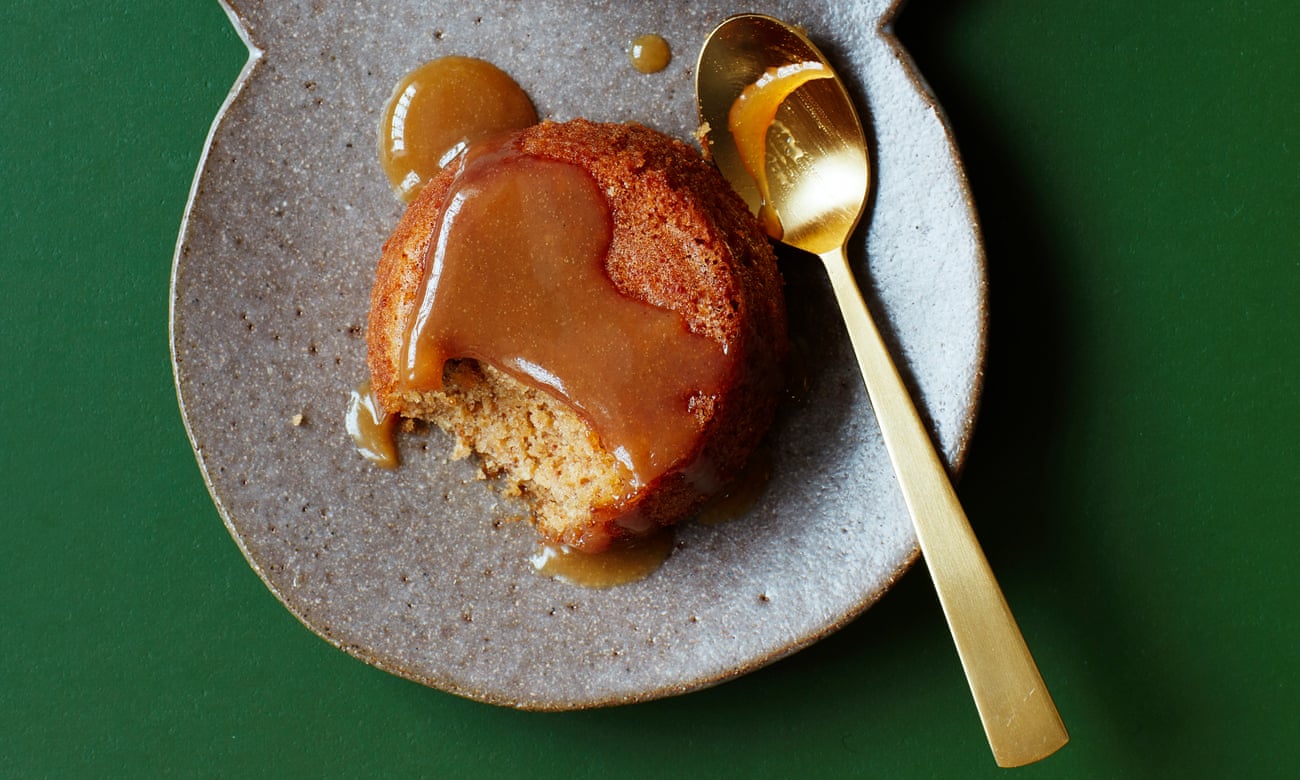
Cream together the butter and sugar until smooth, add the eggs, flour, baking powder and spices, and stir together to form a smooth batter. Finally, stir through the chopped stem ginger. Dollop equal measures of the batter into the pudding tins, then bake for 12 minutes.
Meanwhile, crack on with the sauce. Put all the ingredients in a small saucepan and stir over a medium heat until the sugar has dissolved and the mixture is well blended and smooth. Bring the pan to a simmer and let it bubble away for three minutes, then turn off the heat.
Take the sponges out of the oven, then free them from their tins by running a blunt knife along the edge. Pour some sauce over each pudding and enjoy.
Monday, December 10, 2018
How one Cape Cod home kept its faded glory
A year after John Derian moved into his Greek Revival home in New England, one of his brothers came to stay. He told Derian to take his time with the project. "I didn't have the heart to tell him that I'd already renovated," says Derian. "I just wanted it to be as it was."
Derian is a découpage artist and the founder of John Derian Company Inc, a homeware store that opened in New York's East Village in 1989. There are now four John Derian stores in New York and one in Provincetown. His products – from handmade plates to ceramics, fabrics and furniture – are stocked in more than 600 shops worldwide. In the UK, you'll find them in the Conran Shop and Liberty.
The images Derian sets behind glass are from a collection of antique prints he has amassed over three decades. They come largely from 18th and 19th-century educational resources and depict everything from impossibly vibrant fruit and vegetables and flowers to a scene from a seance or a hyper-real blowfish. Two years ago Derian published the John Derian Picture Book showcasing around 300 images from his collection. "I always tell people to buy a couple of copies," he says. "One to keep, and one to tear apart and put up on their walls!"
I ask him what filters he applies to his search for imagery: "I don't specifically look for anything," he explains. "I find things. I let things happen." It's an approach that appears to work for property, as well as pictures.
As a child, Derian spent his holidays on Cape Cod. In 2006, he returned to Provincetown with a friend. "I wasn't even looking to buy a house, but it was love at first sight," he recalls. "There was something about this house just sitting here, a little bit abandoned-looking. Plus, I'm a sucker for a column…"
The house he fell in love with was built for a sea captain in 1789. When Derian first saw the property, he took a video of the exterior and called the estate agent, only to be told it was under offer. Back in New York, a technical glitch on his phone meant the video kept replaying. A few months later, he was idly searching online for properties in Provincetown and the sea captain's house resurfaced. The original offer had fallen through: Derian could go ahead with the purchase.
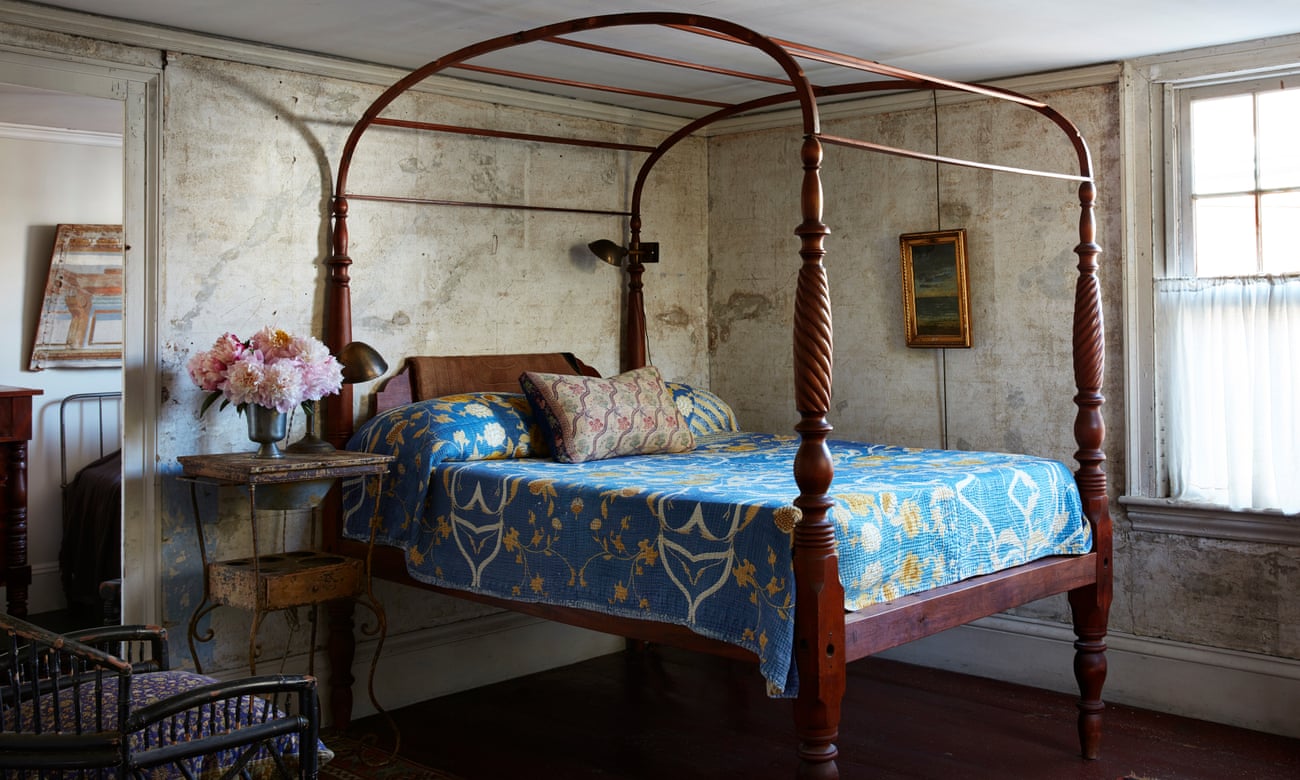
Derian is a découpage artist and the founder of John Derian Company Inc, a homeware store that opened in New York's East Village in 1989. There are now four John Derian stores in New York and one in Provincetown. His products – from handmade plates to ceramics, fabrics and furniture – are stocked in more than 600 shops worldwide. In the UK, you'll find them in the Conran Shop and Liberty.
The images Derian sets behind glass are from a collection of antique prints he has amassed over three decades. They come largely from 18th and 19th-century educational resources and depict everything from impossibly vibrant fruit and vegetables and flowers to a scene from a seance or a hyper-real blowfish. Two years ago Derian published the John Derian Picture Book showcasing around 300 images from his collection. "I always tell people to buy a couple of copies," he says. "One to keep, and one to tear apart and put up on their walls!"
I ask him what filters he applies to his search for imagery: "I don't specifically look for anything," he explains. "I find things. I let things happen." It's an approach that appears to work for property, as well as pictures.
As a child, Derian spent his holidays on Cape Cod. In 2006, he returned to Provincetown with a friend. "I wasn't even looking to buy a house, but it was love at first sight," he recalls. "There was something about this house just sitting here, a little bit abandoned-looking. Plus, I'm a sucker for a column…"
The house he fell in love with was built for a sea captain in 1789. When Derian first saw the property, he took a video of the exterior and called the estate agent, only to be told it was under offer. Back in New York, a technical glitch on his phone meant the video kept replaying. A few months later, he was idly searching online for properties in Provincetown and the sea captain's house resurfaced. The original offer had fallen through: Derian could go ahead with the purchase.
Friday, November 9, 2018
How to make Christmas cake
1 Mix and match
A note about ingredients: those listed are my preferred mix of dried fruit and nuts, but fruitcake is a very personal thing, so feel free to substitute your own blend –sour cherries or cranberries instead of glace fruit; chopped dates or apricots instead of figs; a simple bag of supermarket mixed fruit – so long as you keep the total weight the same.
2 The trick to a moist cake
Many people claim they don’t like fruitcake because it’s dry. Avoid this by soaking the dried fruit and peel in either whisky (or cold tea or fruit juice, if you’d prefer to keep your cake teetotal). Cover and leave to steep for six to 12 hours – I usually do this the night before I’m planning to bake.
3 Be protective
Grease and line a 20cm springform cake tin with two layers of baking paper: this may seem unnecessarily fiddly, but it will prevent the outer layers from burning – very handy when you’re baking with dried fruit, which has a tendency to catch and become very bitter where it sticks out from the sides of the cake.
4 Get creaming
Put the butter and sugar in a large bowl and cream together until very light and fluffy; I’d recommend using electric beaters for at least five minutes until it has significantly increased in volume. Gradually add the eggs, beating well between each addition so the mix doesn’t curdle.
5 Add the spices
Sift the flour into another large bowl, then whisk in the baking powder, spice, ground almonds and a pinch of salt. If you’re not a fan of mixed spice, or don’t have it to hand, you can substitute vanilla extract or other sweet spices, though bear in mind that the likes of nutmeg and cardamom are very strong, so go easy with them.
6 Mix together
Fold these dry ingredients into the butter and sugar mixture, along with the soaked fruits and any remaining soaking liquid, lemon zest, chopped almonds (again, use other nuts or leave them out if you prefer) and ginger, if using. You can leave it out if you like, but it does give the cake a lovely burst of heat.
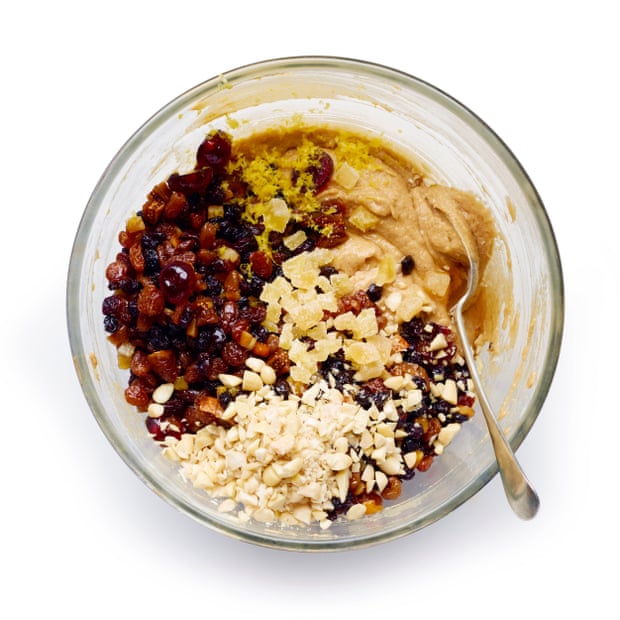
A note about ingredients: those listed are my preferred mix of dried fruit and nuts, but fruitcake is a very personal thing, so feel free to substitute your own blend –sour cherries or cranberries instead of glace fruit; chopped dates or apricots instead of figs; a simple bag of supermarket mixed fruit – so long as you keep the total weight the same.
2 The trick to a moist cake
Many people claim they don’t like fruitcake because it’s dry. Avoid this by soaking the dried fruit and peel in either whisky (or cold tea or fruit juice, if you’d prefer to keep your cake teetotal). Cover and leave to steep for six to 12 hours – I usually do this the night before I’m planning to bake.
3 Be protective
Grease and line a 20cm springform cake tin with two layers of baking paper: this may seem unnecessarily fiddly, but it will prevent the outer layers from burning – very handy when you’re baking with dried fruit, which has a tendency to catch and become very bitter where it sticks out from the sides of the cake.
4 Get creaming
Put the butter and sugar in a large bowl and cream together until very light and fluffy; I’d recommend using electric beaters for at least five minutes until it has significantly increased in volume. Gradually add the eggs, beating well between each addition so the mix doesn’t curdle.
5 Add the spices
Sift the flour into another large bowl, then whisk in the baking powder, spice, ground almonds and a pinch of salt. If you’re not a fan of mixed spice, or don’t have it to hand, you can substitute vanilla extract or other sweet spices, though bear in mind that the likes of nutmeg and cardamom are very strong, so go easy with them.
6 Mix together
Fold these dry ingredients into the butter and sugar mixture, along with the soaked fruits and any remaining soaking liquid, lemon zest, chopped almonds (again, use other nuts or leave them out if you prefer) and ginger, if using. You can leave it out if you like, but it does give the cake a lovely burst of heat.
Thursday, September 27, 2018
Liam Charles’s recipe for pistachio butter and fig jam tart
Heat the oven to 200C/390F/gas 6, then start the pastry. Put the flour, butter, orange zest and mixed spice into a food processor, then blitz until the mix resembles fine breadcrumbs. With the motor running, add the egg yolk, icing sugar and the water, until the dough is just starting to come together. Tip it on to a lightly floured surface, give it a quick knead, then bring together into a smooth ball. Flatten the pastry into a thick disc, wrap in clingfilm and chill for 30 minutes.
Next, make the filling. Put all the ingredients apart from the nuts and jam into a food processor and blitz until smooth and creamy. Put a baking tray in the hot oven.
Take the pastry out of the fridge, put on a lightly floured surface and roll out to 2-3mm thick. Lift the pastry into a 20cm fluted tart tin and press it into the corners – be gentle – leaving a 1cm overhang. Trim the excess pastry with scissors, cover with baking parchment and baking beans, put the tin in the oven on to the baking tray, and bake for 18 minutes.
Remove the parchment and beans, and put the pastry back in the oven for another five to seven minutes. Take out of the oven and use a small serrated knife to trim the pastry to the height of the tin. Turn down the oven to 180C/350F/gas 4.
Spoon the jam on to the pastry and spread to the edges, top with the pistachios and walnuts, then cover with the filling, spreading to the edges to cover the fig jam. Bake for 45-50 minutes, until the sponge is cooked and a skewer comes out clean.
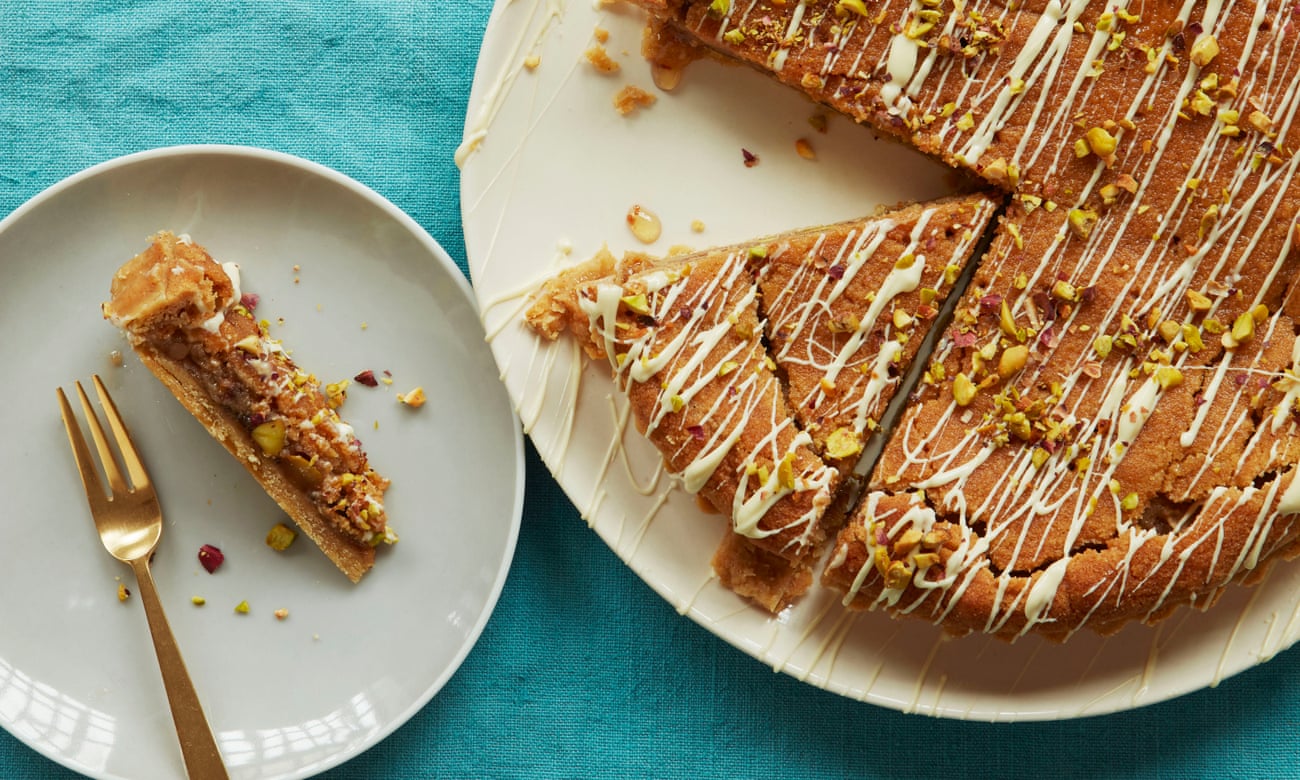
While the tart is still hot from the oven, poke small holes in the surface and then very gently spread a drizzle of runny honey over the top. Cool the tart in the tin for 20 minutes, then put it on a wire rack to cool completely. Take the tart out of the tin, give it a good squiggle of white chocolate, and sprinkle with the extra nuts.
Next, make the filling. Put all the ingredients apart from the nuts and jam into a food processor and blitz until smooth and creamy. Put a baking tray in the hot oven.
Take the pastry out of the fridge, put on a lightly floured surface and roll out to 2-3mm thick. Lift the pastry into a 20cm fluted tart tin and press it into the corners – be gentle – leaving a 1cm overhang. Trim the excess pastry with scissors, cover with baking parchment and baking beans, put the tin in the oven on to the baking tray, and bake for 18 minutes.
Remove the parchment and beans, and put the pastry back in the oven for another five to seven minutes. Take out of the oven and use a small serrated knife to trim the pastry to the height of the tin. Turn down the oven to 180C/350F/gas 4.
Spoon the jam on to the pastry and spread to the edges, top with the pistachios and walnuts, then cover with the filling, spreading to the edges to cover the fig jam. Bake for 45-50 minutes, until the sponge is cooked and a skewer comes out clean.
While the tart is still hot from the oven, poke small holes in the surface and then very gently spread a drizzle of runny honey over the top. Cool the tart in the tin for 20 minutes, then put it on a wire rack to cool completely. Take the tart out of the tin, give it a good squiggle of white chocolate, and sprinkle with the extra nuts.
Wednesday, August 29, 2018
Jaffa cakes are 50% sugar, but what’s in the other half?
Ever since hearing that the England football team takes Jaffa cakes when it goes on tour, I've looked at them with fresh eyes. What is it about the spongy treat that makes it so popular? If athletes eat them, does that mean they qualify as a healthy option?
Jaffa cakes were first made by McVitie's and Price in the UK in 1927. The original was a little sponge topped with jam and a layer of chocolate. There is quite a lot more in there now however. There are also a lot more brands, though the distinction between them seems to be on price and marketing, rather than recipe, with own-brand Jaffa cakes from Jacob's, Aldi, Lidl, Centra, Supervalu and Dunnes, for example.
So what's the difference?
McVitie's wins on marketing. The packaging even mentions its Jaffa cake Facebook page, which has thousands of followers. It also says: "To find out how exercise and a balanced diet can help a healthy lifestyle" That is a fairly standard website run by United Biscuits, which owns McVitie's and is in turn owned by Yildiz Holding, a Turkish food conglomerate. It dishes out uncontroversial advice to eat a balanced diet and get some exercise.
Starch industry
When it comes to ingredients, McVitie's sets the tone and lists more than 30. It's hard to give an exact number and some are mentioned as "and/or". So they may or may not be there. The first ingredient on the list is glucose-fructose syrup and it makes up at least 19 per cent of the ingredients, though probably much more. In the European Union, the fructose content of glucose-fructose syrup is usually about 20 to 30 per cent and it is made from wheat or maize,according to the Starch Europe, a trade association that represents the interests of the starch industry. In the United States, it is often known as high-fructose corn syrup as it is predominately made from corn, and can be up to 50 per cent fructose. So it is similar, though not the same, as the type of sugar used in fizzy drinks in the US. Manufacturers love it because it can provide texture, volume, taste, glossiness, improved stability and a longer shelf life.

Jaffa cakes were first made by McVitie's and Price in the UK in 1927. The original was a little sponge topped with jam and a layer of chocolate. There is quite a lot more in there now however. There are also a lot more brands, though the distinction between them seems to be on price and marketing, rather than recipe, with own-brand Jaffa cakes from Jacob's, Aldi, Lidl, Centra, Supervalu and Dunnes, for example.
So what's the difference?
McVitie's wins on marketing. The packaging even mentions its Jaffa cake Facebook page, which has thousands of followers. It also says: "To find out how exercise and a balanced diet can help a healthy lifestyle" That is a fairly standard website run by United Biscuits, which owns McVitie's and is in turn owned by Yildiz Holding, a Turkish food conglomerate. It dishes out uncontroversial advice to eat a balanced diet and get some exercise.
Starch industry
When it comes to ingredients, McVitie's sets the tone and lists more than 30. It's hard to give an exact number and some are mentioned as "and/or". So they may or may not be there. The first ingredient on the list is glucose-fructose syrup and it makes up at least 19 per cent of the ingredients, though probably much more. In the European Union, the fructose content of glucose-fructose syrup is usually about 20 to 30 per cent and it is made from wheat or maize,according to the Starch Europe, a trade association that represents the interests of the starch industry. In the United States, it is often known as high-fructose corn syrup as it is predominately made from corn, and can be up to 50 per cent fructose. So it is similar, though not the same, as the type of sugar used in fizzy drinks in the US. Manufacturers love it because it can provide texture, volume, taste, glossiness, improved stability and a longer shelf life.
Subscribe to:
Posts (Atom)